

Farm-Grown Bartlett Pears: 10 Years at Credo Farms
A 250-Year-Old Pear and Ten Years at Credo Farms
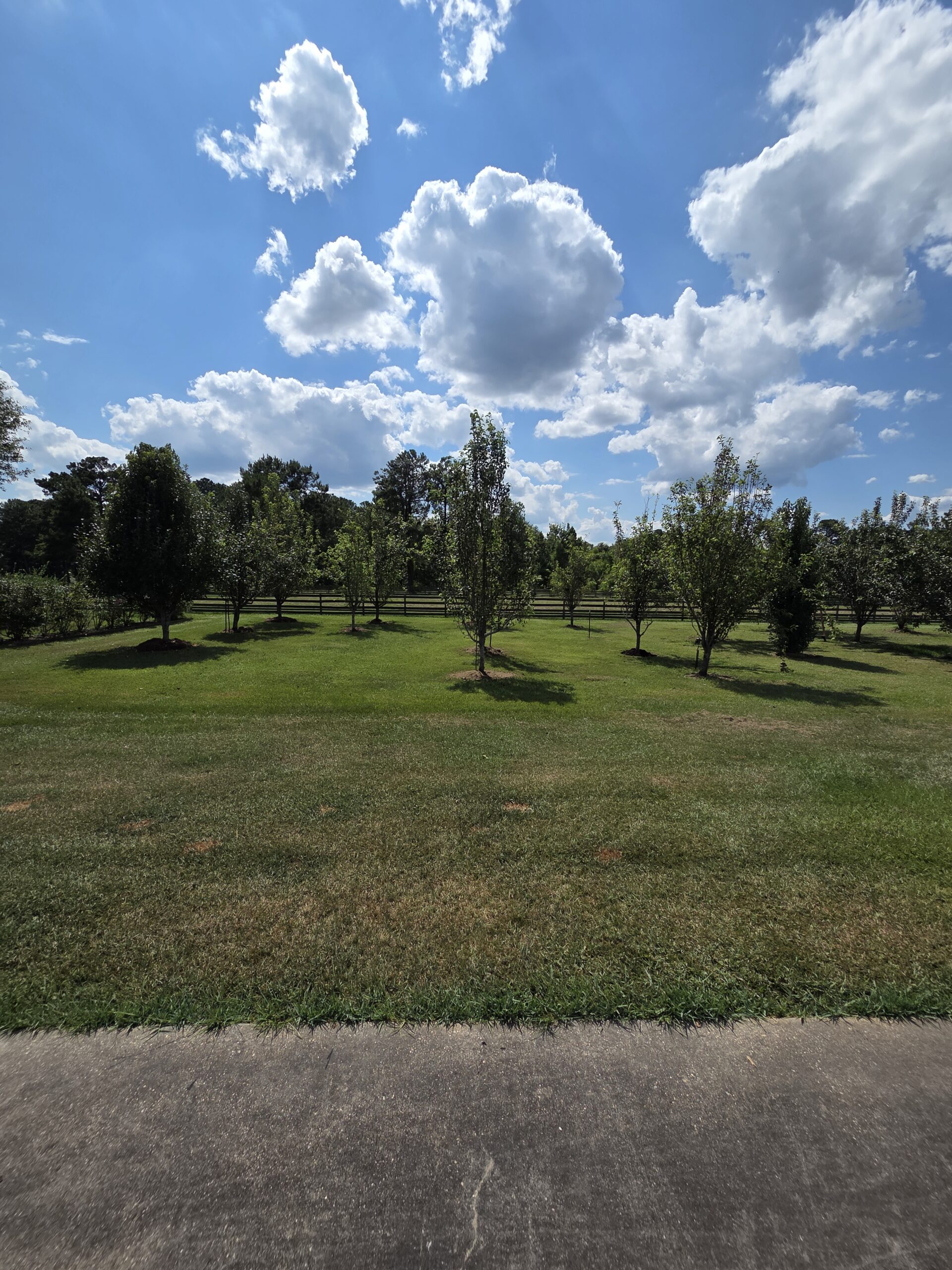
Long before Credo Farms officially opened, our family began planting fruit trees on this land. Among those early plantings were Bartlett pear trees—a variety with a history stretching back more than 250 years.
We introduced Bartlett pears to our farm about ten years ago. At the time, there was no fruit stand, no established farm store, and no guarantee that these young trees would one day produce a harvest large enough to share with our customers. There was simply a family, a piece of land, and the hope that the work we were putting into the ground would bear fruit in the years ahead.
Today, those trees are doing exactly that.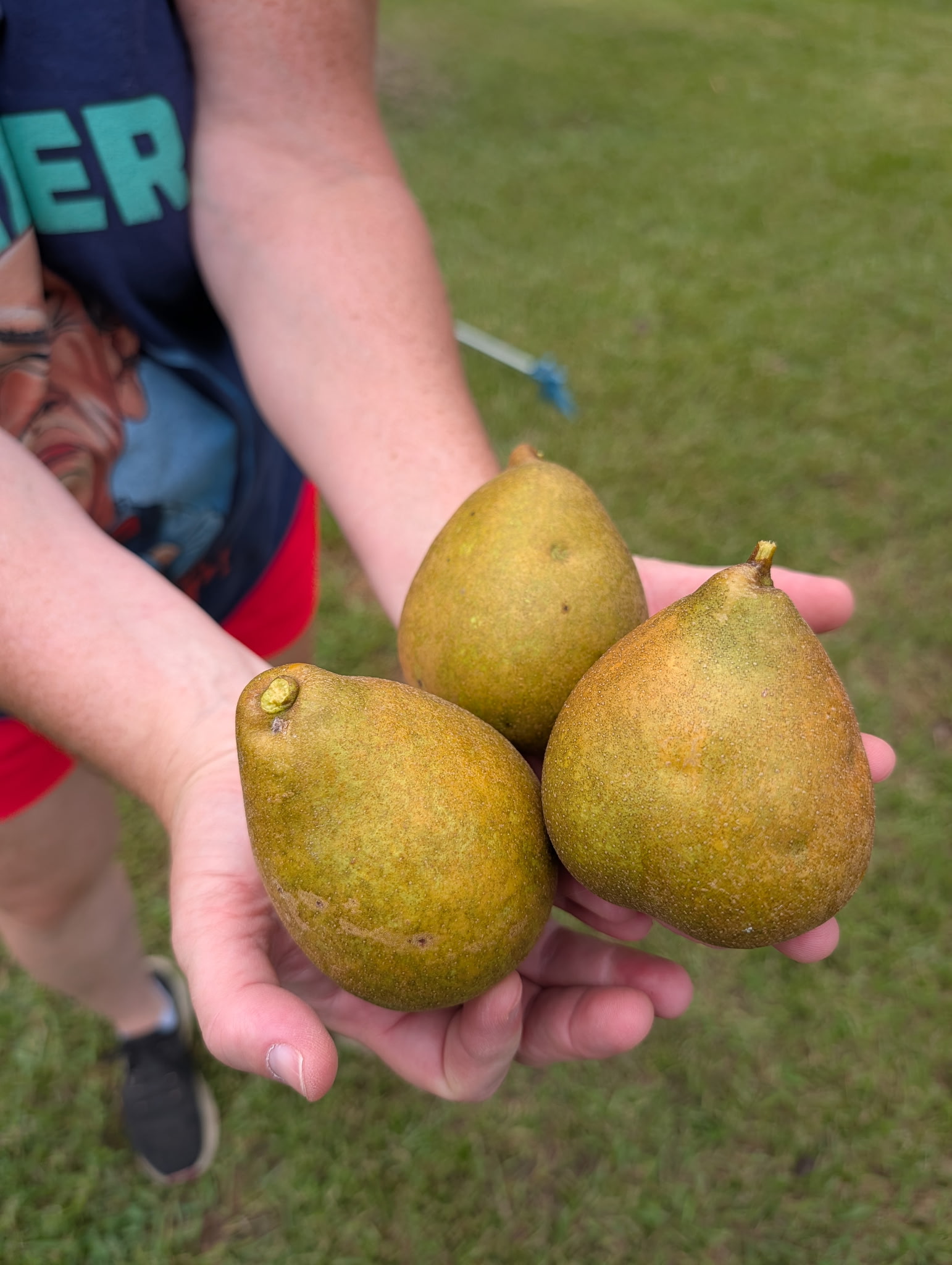
Before the Harvest Came the Work
Fruit trees require patience. You do not plant one in the spring and expect to fill baskets that summer. The trees must first establish their roots, grow strong branches, survive changing weather, and be carefully shaped for future harvests.
Over the past decade, our Bartlett pear trees have been part of many family workdays at Credo Farms. We have spent countless hours planting, pruning, clearing around the trees, watching for damaged limbs, and caring for the orchard through every season.
Some days were productive and encouraging. Other days involved heat, mud, scratches, broken branches, or wondering whether a particular tree would ever amount to much. That is often the reality of farming. Much of the work happens years before there is anything to harvest or sell.
Each time we prune a tree, we are making decisions for future seasons. We remove dead or crowded branches, open the tree so sunlight can reach the fruit, and try to guide its growth into a strong structure. The work can look severe at first, but careful pruning helps the tree direct its strength into healthier branches and better fruit.
The baskets of pears we are gathering today are the result of years of that quiet, patient work.
The Bartlett Pear Began with a Different Name
Although Americans know it as the Bartlett pear, much of the rest of the world calls the same variety the Williams pear or Williams’ Bon Chrétien.
The variety is generally traced to England in the 1700s. According to the commonly told history, it was discovered around 1765 by a schoolmaster named Mr. Stair and was initially known as Stair’s Pear. A nurseryman named Williams later obtained and distributed the variety throughout England, where it became known as the Williams pear.
The variety’s longer European name, Williams’ Bon Chrétien, includes the French words for “good Christian.” The Royal Horticultural Society continues to list the Bartlett as a synonym for Williams’ Bon Chrétien, confirming that the American Bartlett and European Williams are the same pear variety.
How the Williams Became the Bartlett
 The pear eventually crossed the Atlantic and arrived in the United States around 1799. Several trees were planted on the estate of Thomas Brewer in Roxbury, Massachusetts.
The property was later acquired by Enoch Bartlett, a farmer and nurseryman from Massachusetts. Not knowing the trees were already a recognized European variety, Bartlett began propagating and distributing them under his own name.
By the time Americans learned that the Bartlett and Williams pears were the same variety, the Bartlett name had already become firmly established in the United States. That is why shoppers in America usually see Bartlett pears, while shoppers in England and other parts of Europe may see Williams pears.
The Bartlett later traveled west with American settlers. The trees reached California by the time of the Gold Rush and became an important part of the country’s early commercial fruit-growing industry.
It is remarkable to think that a pear first grown in England centuries ago eventually found its way to farms throughout America—and, many generations later, to our family farm in Amite, Louisiana.
Why Bartlett Pears Have Remained Popular
Bartlett pears have remained popular because they are sweet, aromatic, juicy, and useful in so many different ways.
When picked, they are often firm and green. As they ripen, green Bartlett pears gradually become more yellow, softer, sweeter, and increasingly juicy. This visible color change makes it easier to tell when they are ready to eat.
Their tender texture and distinctive pear flavor make Bartletts especially good for:
- Fresh eating
- Fresh pear juice
- Smoothies and fruit drinks
- Canning
- Preserves and jams
- Pear butter
- Baking
- Sauces and desserts
- Drying
Bartletts have long been regarded as an excellent pear for canning and other forms of preservation because of their sweetness and recognizable pear flavor.
Especially Good for Fresh Pear Juice
One of our favorite uses for these pears is juicing.
A ripe Bartlett contains plenty of naturally sweet juice and has a strong pear flavor that comes through beautifully in fresh juice. Pear juice can be enjoyed by itself or combined with apples, citrus, ginger, berries, or other fruits.
Softer pears that may not look perfect enough for a fruit bowl can still be excellent for the juicer. Their appearance may be rustic, but their sweetness and juice are still there.
For the best juice, allow firm pears to ripen at room temperature until they become slightly soft near the neck. Once ripe, use them promptly or move them into the refrigerator to slow further ripening.
Naturally Grown on Our Farm
Our Bartlett pears are grown here at Credo Farms without synthetic pesticides or chemical sprays. Because they are naturally farm-grown, they may not all have the smooth and uniform appearance of commercially packaged grocery-store fruit.
You may notice differences in shape, size, color, russeting, or small surface blemishes. Those natural variations are part of a real farm harvest.
What matters most is what is inside: sweet, juicy Bartlett pear flavor grown through years of family effort.
These trees were planted before Credo Farms officially opened, making them part of the farm’s story from its earliest days. They remind us that farming is rarely about instant results. It is about planting something with faith, caring for it patiently, and trusting that the work may bless someone years later.
This season, we are grateful to finally share more of that harvest with you.
Fresh Bartlett Pears Available Now
Our farm-grown Bartlett pears are available for:
Enjoy them fresh, run them through your juicer, make homemade pear butter, or preserve some of the harvest for later in the year.
Quantities are limited and availability will depend on the harvest, so get them while the trees are producing.